Plain-English Betting Guide
Bet Smart.Bet Informed.
A free, plain-English guide to sports betting — moneylines, spreads, totals, parlays, props, and the basics every fan should understand before placing a wager.
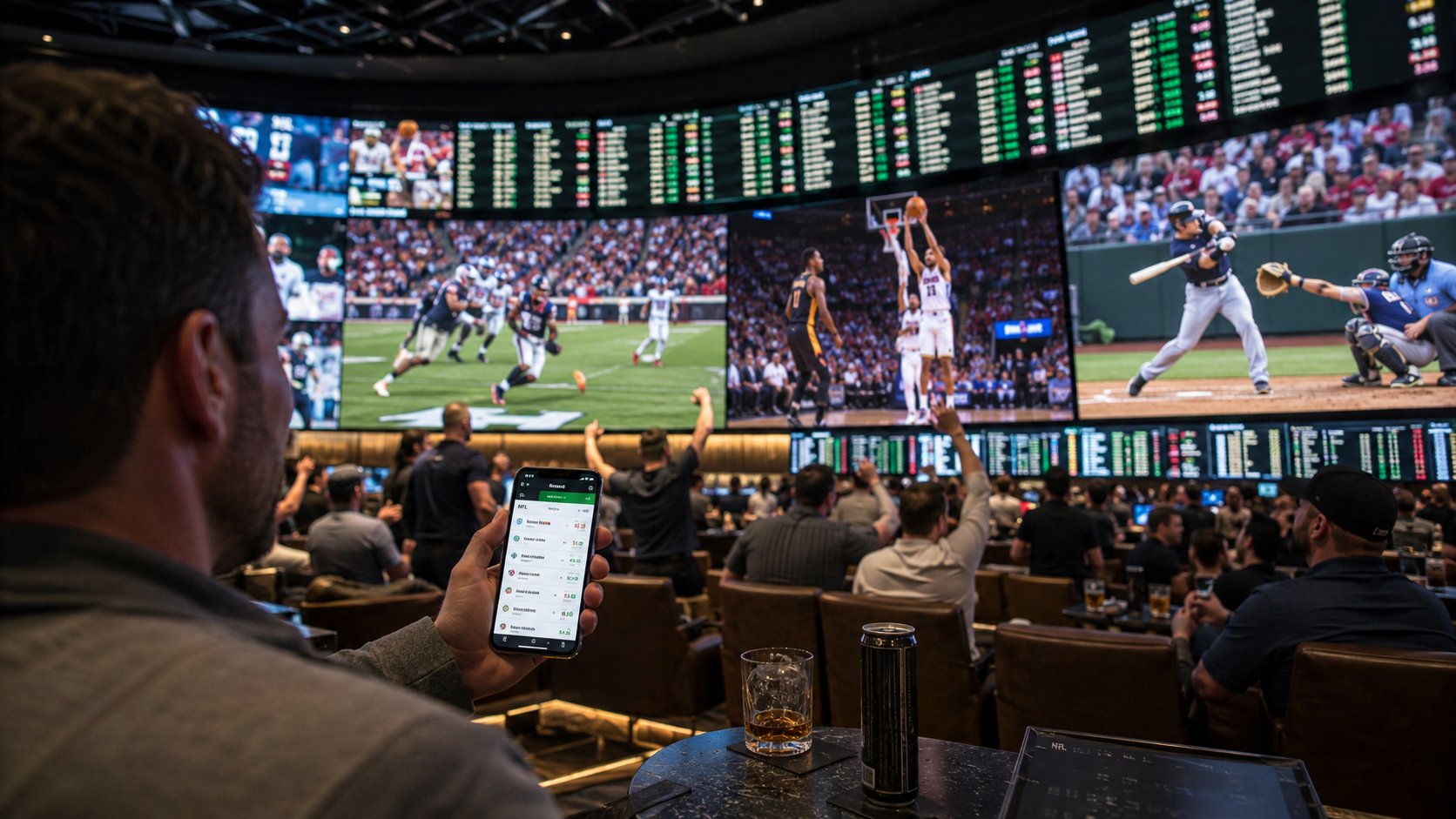
A free, plain-English guide to sports betting — moneylines, spreads, totals, parlays, props, and the basics every fan should understand before placing a wager.
Sports betting is the practice of placing a wager on the outcome of a sporting event. The fundamentals are simpler than they look: you pick what you think will happen, you place a bet, and if you're right, you collect a payout based on the odds.
Three things every bet involves: a selection (what you're betting on — a team, a total, a player), odds (how much the sportsbook will pay if you win), and a stake (the amount you wager).
American odds are displayed with a plus or minus sign. A line like −150 means you'd need to bet $150 to win $100. A line like +130 means a $100 bet would win you $130. The minus sign marks the favorite; the plus sign marks the underdog.
Everything else in this guide builds on those three pieces — selection, odds, stake. Once you understand them, every bet type makes sense.
The moneyline is the simplest bet in sports — you're picking who wins the game outright. No point spread, no margin, no complications. Just: which team wins?
If the team you pick wins, you win the bet. If they lose, you lose the bet. Ties (when possible) usually result in a "push" and your stake is returned. Moneyline bets are the recommended starting point for new bettors because they're the easiest to understand and track.
The odds reflect how much each team is favored. A heavy favorite might be −400 (bet $400 to win $100), while a heavy underdog might be +350 (bet $100 to win $350). Betting favorites pays less but wins more often. Betting underdogs pays more but wins less often.
| Team | Moneyline | $100 Bet Wins |
|---|---|---|
| Boston Celtics (Favorite) | −210 | $47.62 |
| Indiana Pacers (Underdog) | +175 | $175.00 |
| Los Angeles Lakers (Pick'em) | −110 | $90.91 |
| Denver Nuggets (Pick'em) | −110 | $90.91 |
"Pick'em" games are when both teams are roughly equal — the line will be close to even on both sides, with the small margin (the −110 vs +100) representing the sportsbook's commission, called "the juice" or "vig."
A point spread levels the playing field between two unevenly matched teams. The favorite gives points to the underdog. To win a spread bet on the favorite, they need to win by more than the spread. To win on the underdog, they need to lose by less than the spread — or win outright.
You'll see lines like Patriots −7.5 or Bills +7.5. The half-point eliminates the possibility of a push (a tie). Spreads are the most popular bet type in football because they make blowouts and mismatches more interesting to bet on.
Standard spread odds are −110 on both sides — meaning you bet $110 to win $100. The juice is built into the price, not the spread itself.
An "over/under" bet — also called a "total" — has nothing to do with who wins or by how much. You're betting on the combined final score of both teams.
If the sportsbook sets the total at 47.5 for a football game, you can bet the over (you think the combined score will be 48 or more) or the under (you think it will be 47 or fewer). The final score 24–17 (41 total) wins for under bettors. A 31–28 game (59 total) wins for over bettors.
Totals bets are popular because they don't depend on rooting for a specific team. You're essentially betting on the style of the game — high-scoring shootout or defensive grind.
A parlay combines multiple individual bets into one bet. To win, every single leg must win. Lose any one — even by half a point — and the entire parlay loses. The payoff is much larger than betting each leg individually, which is why parlays are popular but statistically much harder to win.
A 2-leg parlay combines two bets. A 3-leg parlay combines three. Same-game parlays (SGPs) combine multiple bets from a single game — for example, "Patriots to win + Over 45.5 + Stevenson over 75 rushing yards." Each leg adds risk but multiplies the potential payout.
The math gets aggressive fast. A 4-team parlay where each leg is at −110 odds pays out roughly 12-to-1. A 6-team parlay pays around 40-to-1. An 8-team parlay can hit 150-to-1 or more. Sportsbooks love parlays because the more legs you add, the more likely you are to lose at least one.
Pro tip: Parlays are fun for small bets but bad as a primary betting strategy. Most experienced bettors stick to single bets and use parlays sparingly for entertainment value.
| Parlay Size | Approx. Payout | $10 Bet Wins | Probability |
|---|---|---|---|
| 2 legs (−110 each) | 2.6 to 1 | $26.32 | ~27% |
| 3 legs (−110 each) | 6 to 1 | $59.61 | ~13% |
| 4 legs (−110 each) | 12 to 1 | $120.65 | ~6% |
| 5 legs (−110 each) | 24 to 1 | $242.51 | ~3% |
| 6 legs (−110 each) | 47 to 1 | $481.66 | ~1.5% |
| 8 legs (−110 each) | 175 to 1 | $1,876.50 | ~0.4% |
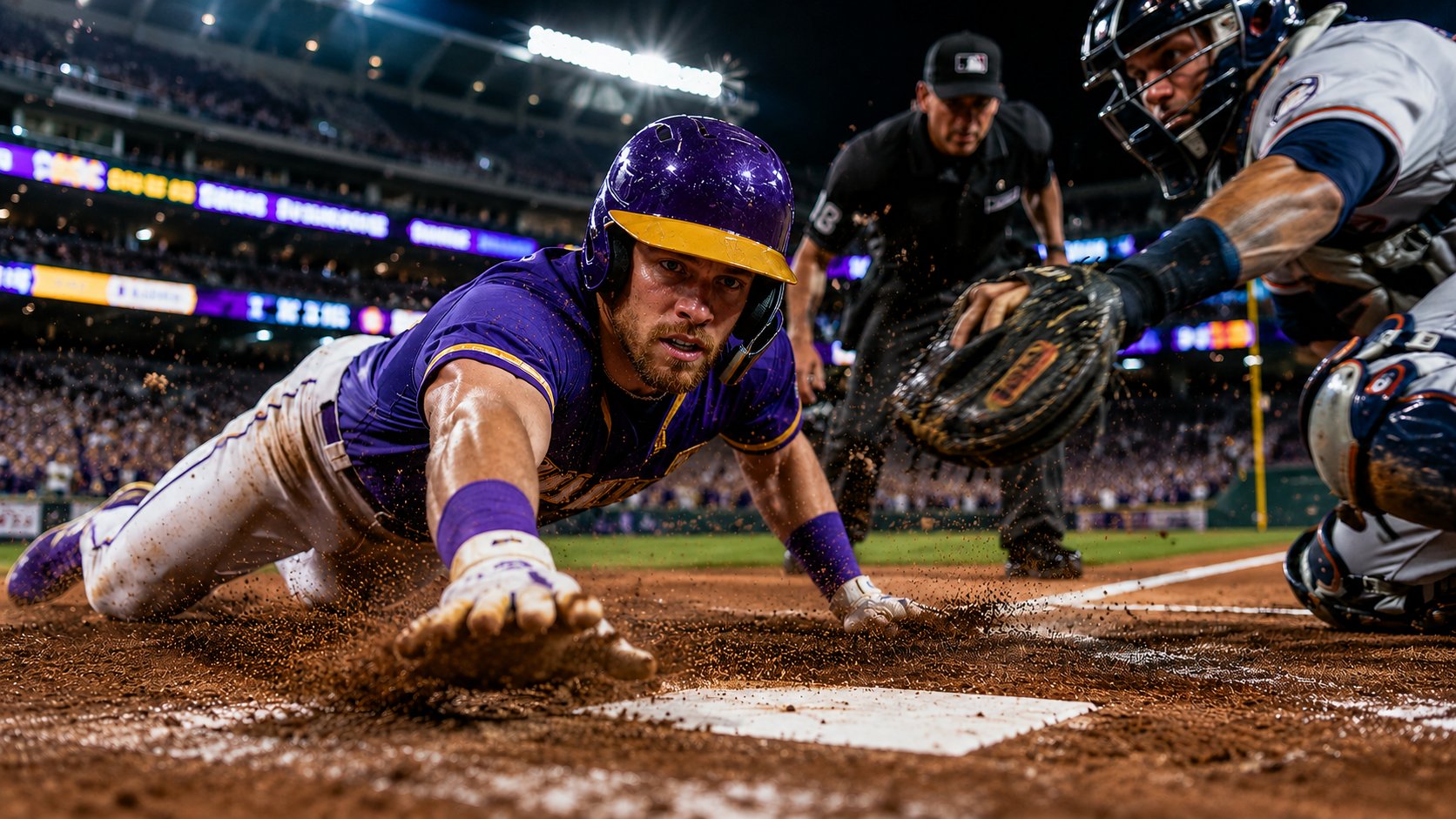
Prop bets — short for "proposition bets" — are wagers on specific events within a game that don't directly depend on the final score. Player props bet on individual performances. Game props bet on specific occurrences.
Player prop examples: Will a quarterback throw for over 275.5 yards? Will a basketball player score 20+ points? Will a baseball player hit a home run?
Game prop examples: Will the first score be a touchdown or field goal? Which team scores first? Will the game go to overtime?
Props have exploded in popularity since legal sports betting expanded in the U.S. They give fans dozens of ways to engage with a game beyond just picking the winner. The Super Bowl alone offers hundreds of prop bets — from the coin toss to the color of the Gatorade dumped on the winning coach.
Sports betting should be entertainment, not income. The single most important rule is to only bet money you can afford to lose — never bet rent money, never bet borrowed money, never chase losses.
Healthy habits: set a budget before you bet and stick to it. Treat betting like the cost of going to a concert — money spent for entertainment, with no expectation of getting it back. Take regular breaks. If you find yourself betting more to win back losses, stop and walk away.
Warning signs of problem gambling: betting more than you can afford, lying about how much you bet, chasing losses with bigger bets, gambling to escape stress, neglecting work or relationships because of betting.
Florida treats online sports betting differently than most other states. Hard Rock Bet is the legal online sportsbook option identified for Florida users. Other sportsbook brands that may be advertised nationally may not be legal online options in Florida.
If you live in or are physically located in Florida when placing a bet, always confirm the current rules and operator availability before wagering. State regulations change, and what's legal today may not be tomorrow — or vice versa.
Common questions about how sports betting works and the different bet types.
A moneyline bet is the simplest sports wager - you're picking which team will win the game outright, with no point spread. Odds are shown with plus or minus signs: -150 means you'd bet $150 to win $100 (favorite), while +130 means a $100 bet wins $130 (underdog).
A point spread levels the playing field by giving the favorite a handicap. If a team is favored by -7.5, they need to win by 8 or more points for you to win the bet. The underdog +7.5 wins if they lose by 7 or less or win outright. Standard odds are -110 on both sides.
An over/under (or total) bet is wagering on the combined final score of both teams. If the total is set at 47.5 for an NFL game, you bet whether the combined score will be 48 or more (over) or 47 or fewer (under). The winner of the game doesn't matter.
A parlay combines multiple individual bets into one wager. To win, every single leg (bet) must hit. The payout multiplies with each added leg - a 4-leg parlay at standard odds pays about 12-to-1. The risk also multiplies; losing any one leg loses the entire parlay.
Prop bets (proposition bets) are wagers on specific events within a game that don't directly depend on the final score. Player props bet on individual stats (quarterback passing yards, basketball player points). Game props bet on specific occurrences (first scoring play, whether game goes to overtime).
Sports betting legality varies dramatically by state. As of 2026, online sports betting is fully legal in 30+ states, retail-only in several others, tribal-only in some, and not legal in a handful. Check your specific state's status before placing any wager.
The point spread is a margin set by oddsmakers to level the playing field between two teams. The favorite must win by more than the spread for a bet on them to pay out, while the underdog can lose by less than the spread (or win outright) for an underdog bet to win. It's designed to attract roughly equal action on both sides.
A parlay combines multiple bets into one wager, with a bigger payout because all selections must win. The catch is that a single losing leg sinks the entire parlay, making them higher-risk. They can be fun for small stakes with large upside, but the odds of hitting every leg drop quickly as you add more selections.